Explosions echoed from Tehran to Jerusalem as the fifth day of War coordinated U.S. and Israeli strikes on Iran unfolded, marking one of the most volatile moments in Middle Eastern geopolitics in years. With missile barrages intensifying, naval confrontations expanding, and global markets reacting nervously, the conflict shows no immediate signs of slowing, raising urgent questions about how far the escalation could go.
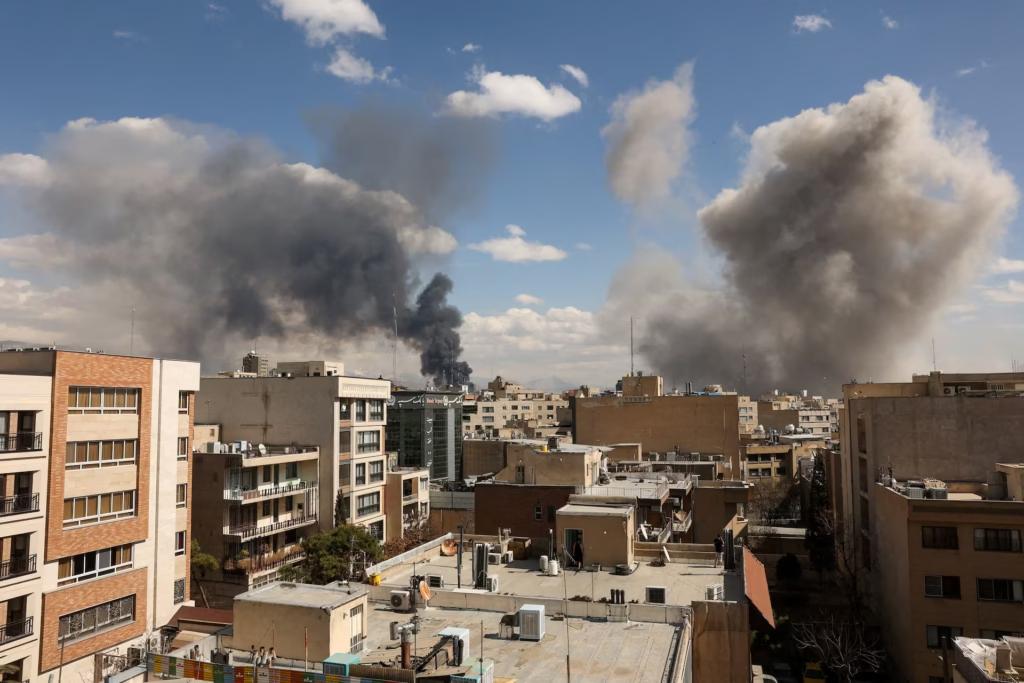
Here are the latest verified news updates on Day Five of the ongoing conflict involving the United States, Israel and Iran — based on the most recent reporting today:
DAY FIVE HIGHLIGHTS AND ESCALATION
Major strikes continue across the region: On the fifth day of this rapidly expanding conflict, Israel has carried out extensive airstrikes on multiple Iranian targets, including strategic military sites in Tehran and Beirut – while Iranian missile and drone attacks continue to target Israel and U.S. bases stationed in several Gulf states such as Bahrain, Qatar, Saudi Arabia, and the United Arab Emirates.
U.S. forces sink Iranian warship: In a significant escalation, U.S. Defense Secretary Pete Hegseth confirmed that a U.S. submarine launched a torpedo that sank an Iranian warship near Sri Lanka — marking one of the first major naval engagements of the conflict.
Explosions reported in Tehran and Jerusalem: Explosions were heard on Day Five in both Tehran and Jerusalem, reflecting the ongoing intensity of operations. Israeli strikes hit more than 250 Hezbollah targets in southern Lebanon as retaliation escalates, and Iran’s Revolutionary Guard has threatened wider destruction of military and economic infrastructure.
HUMAN AND POLITICAL COSTS
High death toll: Casualties remain high across the region. Reports estimate over 1,000 people killed in Iran alone, with additional fatalities in Lebanon, Israel, and at least six U.S. service members lost in the conflict so far.
UN condemns violations of international law: An independent United Nations investigation has strongly criticized both the U.S.–Israeli military actions and Iranian retaliation, concluding that they violate the UN Charter which protects national sovereignty and prohibits force against another state. The probe specifically highlighted an attack on a school in southern Iran that reportedly killed more than 160 children, and raised concern over human rights abuses exacerbated by the conflict.
Iran’s leadership funeral delayed: Iran postponed the state funeral for Supreme Leader Ayatollah Ali Khamenei, whose death in earlier U.S.–Israeli strikes was a key catalyst in the outbreak of war. Nationwide mourning and succession discussions continue amid ongoing hostilities.
Military messaging from Israel: Israeli Defense Minister Israel Katz announced that the Israel Defence Forces (IDF) are now focused on dismantling Iran’s broader regional influence, describing ongoing campaigns against missile infrastructure and command sites as part of a wider effort to reduce Tehran’s strategic capabilities.
WIDER IMPACTS AND RESPONSES
Regional instability deepens: The conflict’s fifth day has seen attacks that reach beyond traditional battle lines. Missile and drone activity has hit diplomatic and economic sites, including incidents near the U.S. consulate in Dubai and air attacks against allied military installations in Gulf states.
Economic and energy disruption: Global markets remain unsettled. The closure of the Strait of Hormuz, through which a significant portion of the world’s oil supply transits, has created severe risks to energy distribution and raised insurance and transport costs worldwide.
International condemnations and alliances: Many countries and international organisation’s have called for restraint, even as military alignments harden. NATO condemned Iranian missile targeting of allied airspace, while governments in Europe and the Middle East have expressed alarm at the scale of violence and its potential to trigger a wider war.
Civilian displacement and emergency measures: Governments including India’s Ministry of External Affairs have activated emergency response teams and helplines to assist citizens caught in conflict zones, and some countries have begun evacuations or suspended consular services as security deteriorates.
Related: Israel-Iran War: Indian Airlines Operate Special Flights Amid Middle East Airspace Disruptions
CONFLICT DYNAMICS ON DAY FIVE
The U.S. military reports that its campaign has struck nearly 2,000 targets in Iran, including air defence systems, ballistic missiles, drones, and naval vessels, significantly degrading Iran’s offensive capabilities according to U.S. commanders.
Iran, for its part, has launched hundreds of ballistic missiles and drones against Israeli, American, and Gulf facilities, signalling a commitment to sustained retaliation despite mounting losses.
Leadership succession in Tehran remains a pivotal issue, with Iran’s government moving to formally appoint a successor to its slain supreme leader while under fire, a factor that could influence Tehran’s strategic decisions in coming days.
OVERVIEW
As the conflict enters its fifth full day, the region faces relentless military pressure from all sides. The combination of strategic bombing campaigns, naval engagements, and retaliatory strikes has amplified the risks of broader regional war, disrupted global energy infrastructure, and resulted in significant civilian and military casualties. Major international institutions continue to call for de-escalation, but with combat operations still active across multiple fronts, the situation remains volatile and unpredictable.

