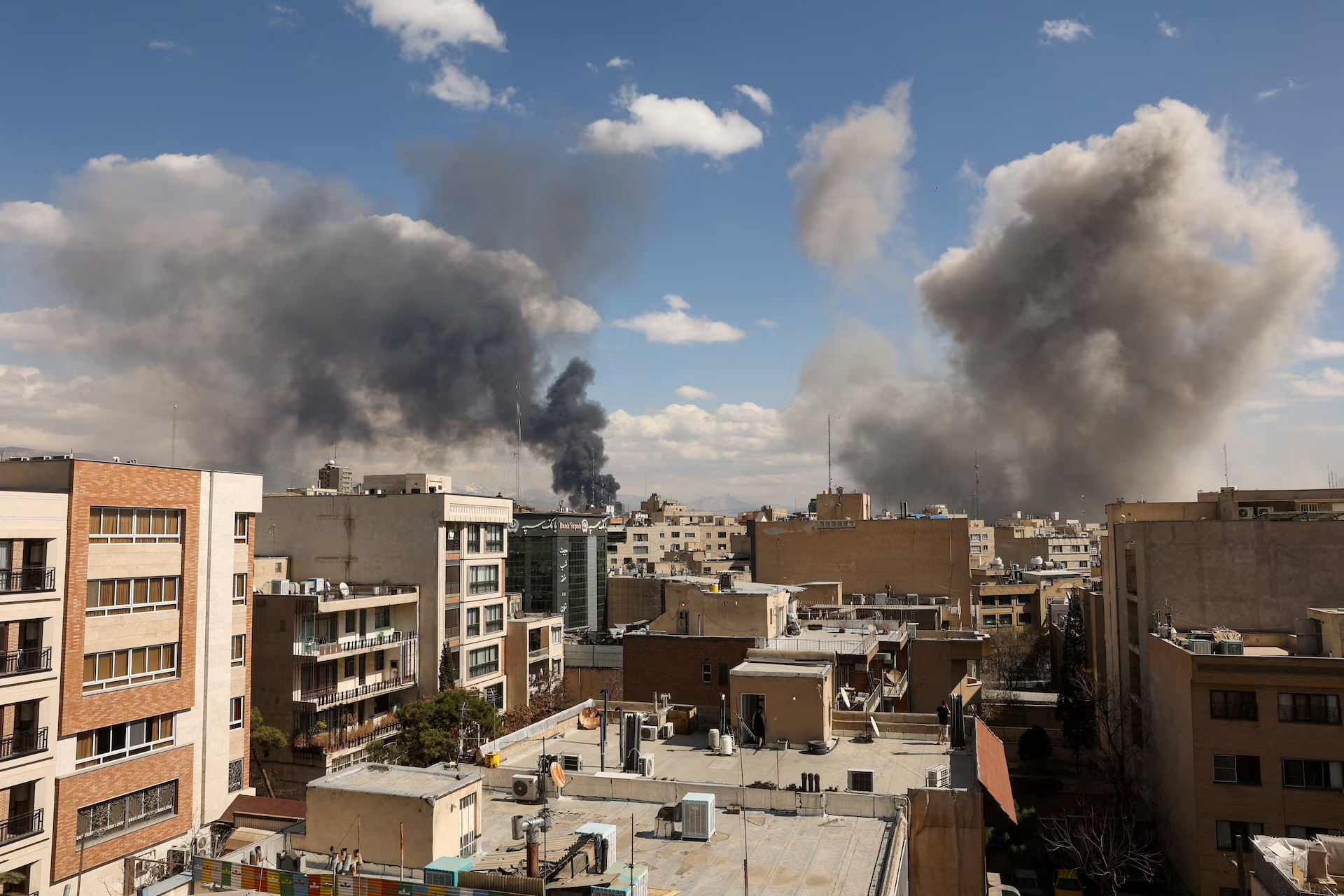
New Delhi: Several Indian carriers, including SpiceJet and IndiGo, have announced special flight operations and changes to schedules as international travel continues to be disrupted due to escalating geopolitical tensions, Israel_Iran war and airspace closures in the Middle East. The disruptions stem from recent military activity and have forced airlines to adjust services to ensure passenger safety and assist stranded travellers.

SpiceJet to Run Special UAE Flights amid Israel-Iran War Conflict
Budget airline SpiceJet has said it will operate four special flights from the United Arab Emirates (UAE) on March 3, 2026, to help bring Indian nationals and other affected passengers home amid widespread disruptions caused by the ongoing Middle East conflict. These flights will connect the UAE city of Fujairah with key Indian destinations, including Delhi, Mumbai and Kochi.
According to the airline, these services are temporary and will continue for the next few days as necessary. Additionally, SpiceJet plans to resume its scheduled Fujairah-Delhi and Fujairah-Mumbai routes from March 4, marking a step toward normalcy as regional airspace restrictions ease but remain unpredictable.
Travel Advisory
— IndiGo (@IndiGo6E) March 2, 2026
As part of our efforts to progressively normalize our operations between Saudi Arabia and India, we will be operating four dedicated flights from Jeddah tomorrow, 3rd March 2026, to
🔹 Mumbai
🔹 Hyderabad
🔹 Ahmedabad
These flights are being arranged to cater…
VIDEO | Stranded Indian passengers return India from Dubai on special flight. Visuals from Bengaluru airport.
— Press Trust of India (@PTI_News) March 3, 2026
(Full video available on PTI Videos – https://t.co/n147TvrpG7) pic.twitter.com/gTO90fGYqk
IndiGo’s Relief Flights From Jeddah
At the same time, IndiGo has announced that it will operate 10 special relief flights from Jeddah, Saudi Arabia, to several Indian cities on March 3 to assist passengers who were unable to travel due to the sudden closure of airspace across parts of the Middle East.
These special flights are scheduled to connect Jeddah with Hyderabad, Mumbai, Delhi, and Ahmedabad. The operations are being carried out in coordination with the Ministry of Civil Aviation and subject to prevailing airspace conditions and regulatory approval. The airline is also working closely with the Consulate General of India in Jeddah to ensure smooth passenger facilitation.
Why These Changes Are Happening
The need for special flights comes after major airspace closures and flight suspensions in the Middle East following intensified military operations related to the Iran conflict. These developments have affected key international travel routes and caused cancellations or rerouting of flights worldwide.
Airline hubs in countries such as the UAE, Qatar, Saudi Arabia, Kuwait, Iraq, Bahrain and Israel saw airspace closures, disrupting normal operations. As a result, airlines were forced to suspend or reroute flights to and from these regions.
Wider Flight Cancellations and Adjustments
In addition to special flights, many scheduled services between India and the UAE have been cancelled or temporarily halted. Several flights scheduled for March 2 and 3 were called off due to the closure of UAE airspace, affecting routes from Indian cities to destinations like Dubai and Sharjah. Passengers have been urged to check flight statuses and contact airlines for rebooking or refunds.
Meanwhile, airlines such as Air India have extended the suspension of flights to and from affected Middle Eastern countries until at least March 3, 2026, citing ongoing safety concerns associated with the evolving conflict.
En route to the All England Open, PV Sindhu was stranded at Dubai airport after US and Israeli strikes on Iran triggered airspace closures and flight disruptions.
Sharing a calm update, she thanked Dubai authorities before returning home safely, skipping the tournament and now… pic.twitter.com/a0X5E8uzsl— Mid Day (@mid_day) March 3, 2026
Impact on Travellers and Safety Measures
With airspace restrictions still in place in many parts of the region, travellers are facing continued uncertainty in international travel plans. Airlines have asked passengers to:
Stay updated with the latest flight information from official airline channels.
Check schedules before heading to airports due to last-minute changes.
Utilise rebooking or refund options offered by carriers amidst the disruptions.
The civil aviation ministry has also emphasised transparent communication and passenger assistance standards across all affected sectors to help mitigate inconvenience for those impacted by the airspace disruptions.
Looking Ahead
While special operations by SpiceJet and IndiGo aim to assist stranded passengers and restore connectivity, the situation remains fluid. Indian carriers and foreign airlines are continually reviewing flight operations, adjusting routes where feasible, and coordinating with regulatory authorities to safely resume services as conditions allow.
Passengers are strongly advised to monitor updates directly from airline websites and official aviation advisories before planning travel.