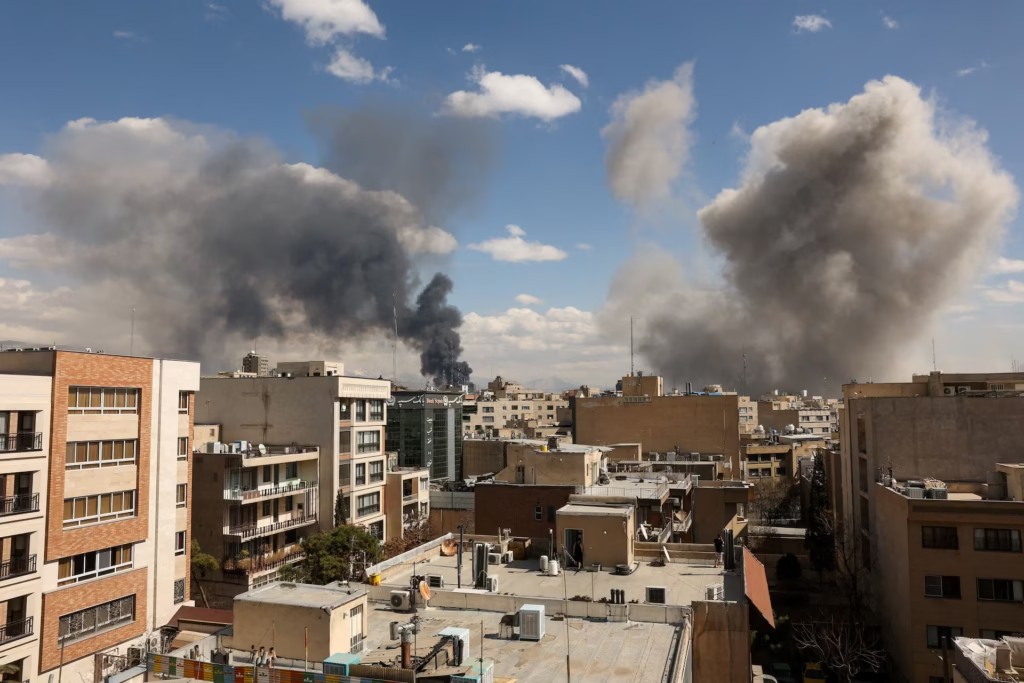
US-Israel-Iran War: The conflict between the United States, Israel and Iran entered its twelfth day on March 11, with sustained airstrikes, missile attacks and growing economic disruption across the Middle East. What began as a coordinated military campaign against Iranian targets has rapidly evolved into one of the most serious geopolitical crises of 2026, affecting global energy markets, regional security and international diplomacy.
Quick Insights:
Conflict start:
The war began on 28 February 2026 when the United States and Israel launched coordinated airstrikes across Iran targeting military and nuclear infrastructure.
Major trigger:
The initial strikes killed Iran’s Supreme Leader Ali Khamenei and several senior officials, dramatically escalating tensions.
Retaliation:
Iran responded with hundreds of drones and ballistic missiles targeting Israel and U.S. military bases in several Middle Eastern countries.
Regional impact:
Missile attacks and proxy clashes have spread across Lebanon, Iraq and Gulf states hosting U.S. forces.
Economic shock:
Oil shipments through the Strait of Hormuz have been disrupted, affecting roughly 20% of the world’s oil supply and driving up energy prices.
JUST IN: 🇮🇷🇹🇭 Iran strikes Thai ship attempting to pass through the Strait of Hormuz. pic.twitter.com/PHW1mmqw6S
— BRICS News (@BRICSinfo) March 11, 2026
US-Israel-Iran War Latest Updates:
The war between the United States, Israel and Iran has entered its twelfth day, with intense military operations continuing across several fronts in the Middle East. Airstrikes, missile launches and naval confrontations have intensified since the conflict began in late February, creating widespread regional instability and sparking global concerns about energy security and economic disruption.
Origins of the Conflict
The crisis began on February 28, 2026, when Israeli and U.S. forces launched coordinated airstrikes across multiple Iranian cities under a military campaign aimed at weakening Tehran’s nuclear and missile programs. Targets reportedly included military bases, leadership compounds and strategic infrastructure in cities such as Tehran, Isfahan and Qom.
During the initial assault, Iran’s Supreme Leader Ali Khamenei was killed along with several senior officials. Iranian authorities confirmed the death the following day, triggering a leadership transition and a wave of retaliation.
The assassination of such a high-ranking figure marked a major turning point in regional geopolitics and prompted immediate retaliation from Iran.
Intensifying Military Operations
By the twelfth day of the war, both sides had expanded their operations significantly. U.S. and Israeli forces have continued airstrikes against Iranian military facilities and strategic infrastructure. Meanwhile, Iran has launched large waves of missiles and drones against Israeli territory and U.S. bases throughout the Middle East.
The ongoing attacks have involved targets in several countries including Qatar, Bahrain, Saudi Arabia and the United Arab Emirates, where U.S. military installations are located.
Military analysts say the conflict has increasingly become a regional confrontation rather than a bilateral war.
According to live reporting by Reuters, Iran continues to fire missiles toward Israeli targets and other regional locations while U.S. and Israeli forces maintain their bombardment of Iranian positions.
Regional Proxy Conflict
Iran-aligned groups across the Middle East have also become involved in the conflict, though not all have escalated to full-scale war.
Hezbollah forces in Lebanon have exchanged attacks with Israeli forces, while militias in Iraq have targeted U.S. facilities with drones and rockets. At the same time, some Iranian-backed groups appear to be limiting their involvement to avoid triggering a broader regional war.
This cautious approach among proxy groups may reflect strategic calculations by Tehran or disruptions in command structures following the deaths of key Iranian leaders.
Iran’s Strategy: Endurance and Economic Pressure
Analysts say Iran is attempting to outlast its opponents rather than defeat them militarily. According to reporting from Reuters, Iran’s strategy involves sustained missile and drone attacks while disrupting global energy routes to pressure Western governments.
One of the most significant developments in the conflict has been the disruption of shipping through the Strait of Hormuz, a critical maritime chokepoint that handles about one-fifth of the world’s oil supply.
Iranian warnings and attacks on vessels have dramatically reduced tanker traffic through the strait, with hundreds of ships avoiding the route due to security concerns.
The resulting supply disruption has sent global oil prices sharply higher and triggered emergency responses from international energy agencies.
Global Economic Impact
The war’s impact on global markets has been immediate and significant. Oil prices surged above $100 per barrel during the first week of the conflict as traders feared prolonged disruptions to energy supply.
To stabilize markets, the International Energy Agency has reportedly ordered a massive release of strategic oil reserves, while several countries have begun preparing emergency energy plans.
Financial markets have also reacted with volatility as investors weigh the risks of a prolonged regional conflict affecting trade routes and energy supply chains.
Update from CENTCOM Commander on Operation Epic Fury: pic.twitter.com/5KQDv0Cfxs
— U.S. Central Command (@CENTCOM) March 11, 2026
Domestic Developments in Iran
Inside Iran, authorities have tightened security measures amid the ongoing war. Iranian intelligence agencies announced the arrest of dozens of individuals accused of spying for the United States and Israel, according to state media.
The arrests come as Iran’s leadership attempts to maintain internal stability following the death of the country’s supreme leader and continued bombardment.
Despite economic hardship and political tensions, analysts note that public protests against the government have been limited, partly due to security crackdowns and growing nationalist sentiment against foreign intervention.
Uncertain War Objectives
Although military operations continue, there remains uncertainty about the ultimate objectives of the United States and Israel.
Some officials initially suggested that weakening Iran’s leadership could encourage political change inside the country. However, Israeli officials now acknowledge that the collapse of Iran’s government is far from certain.
Without a clear end strategy, the war could continue for weeks or even longer, raising concerns about a prolonged regional conflict.
Growing International Concern
World leaders and international organizations have called for restraint as the conflict continues to escalate.
Diplomatic efforts are underway to prevent the war from expanding further across the Middle East, but so far there have been no major breakthroughs in negotiations.
With the war now in its twelfth day and no ceasefire in sight, the risk of further escalation remains high.
Conclusion
As the war between the United States, Israel and Iran enters its second week, the conflict shows no clear signs of ending. Sustained military strikes, regional proxy clashes and disruption of global energy markets have transformed the crisis into a major geopolitical challenge.
While both sides continue their military campaigns, the absence of a diplomatic breakthrough means the situation remains volatile, with the potential to reshape the political and economic landscape of the Middle East in the months ahead.


